
What to expect when your child starts long day care
By Marcus Quinn · Updated 2026-06-25
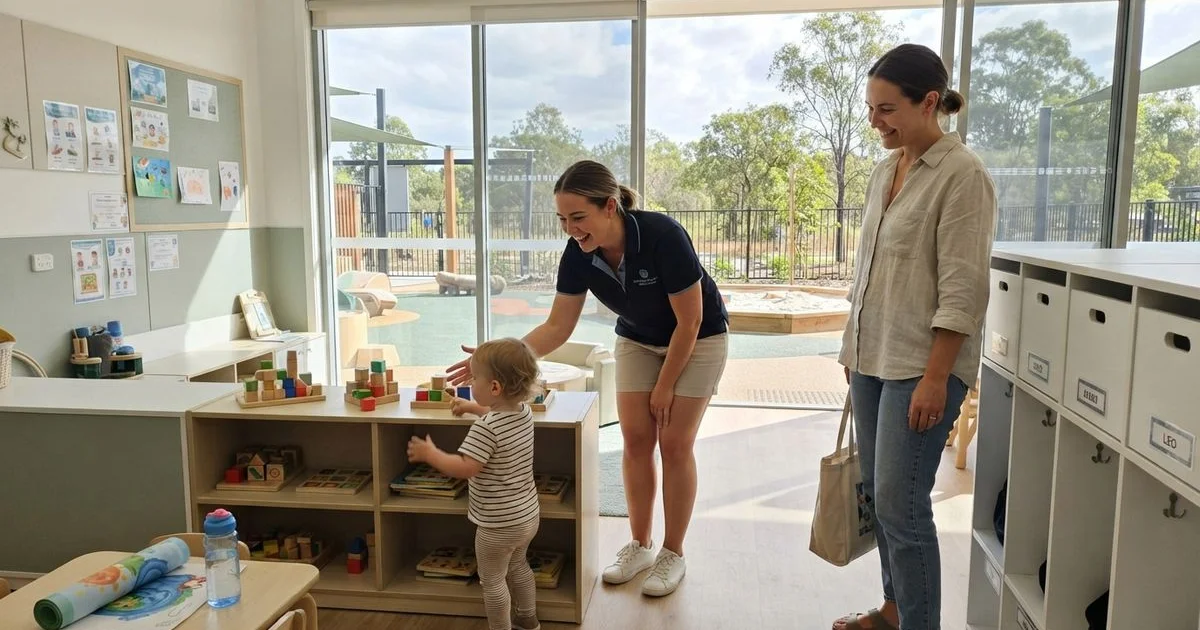
The paperwork is the easy part. What actually determines how the first weeks go is usually the groundwork done before day one: the visits, the questions you ask, and how much the centre tells you about what a normal day looks like.
If you have not yet compared options, our long day care listings are a reasonable starting point before you lock in enrolment.
Before enrolment: paperwork and questions
Centres will ask for a mix of standard documents and centre-specific forms:
- immunisation records, since centres are required to check these before a child starts
- emergency contacts and any medical information, including allergies or conditions staff need to know about
- your Child Care Subsidy details if you are claiming it, which the centre uses to work out your actual gap fee
- an enrolment form covering routines, comfort items and anything specific to your child
This is also the point to ask about the things that will not be obvious from a brochure: staff-to-child ratios in your child’s room, how often educators rotate, and what a typical day looks like hour by hour.
If you are still weighing long day care against a home-based alternative, the guide on how family day care works, day to day covers what a typical day looks like in that setting too.
Settling-in visits
Most centres offer at least one short visit before the first real day, and some offer more if you ask. A good settling-in visit usually includes:
- meeting the educators in your child’s room by name
- a short stay, sometimes with a parent present for part of it
- a look at where your child’s belongings go, so the room feels a bit familiar
Children who have had even one or two visits tend to settle faster than children walking in cold. If your child has additional needs or a history of separation difficulty, ask whether extra visits are possible; most centres will accommodate this without treating it as unusual.
A typical first day, hour by hour
| Time | What usually happens |
|---|---|
| Drop-off | Sign-in, a quick handover with the educator, a short goodbye |
| Morning | Free play and small-group activities, morning tea |
| Midday | Lunch, then rest or quiet time depending on age |
| Afternoon | Outdoor play, afternoon tea, more structured activities |
| Pick-up | Handover notes on sleep, meals and mood for the day |
Ask the centre for their own version of this, since routines shift by age group and by centre.
The first two weeks
Expect some tears at drop-off, even from children who have done group care before. Most educators will encourage a brief, confident goodbye rather than a long one, since lingering tends to make the separation harder, not easier. A quick hug, a short goodbye phrase, and leaving promptly usually works better than staying to comfort a crying child at the door.
Ask how the centre prefers to keep you updated. Many use an app for photos and short notes through the day, which can be reassuring in the first week or two even if you settle into checking it less often later.
If your child is still distressed most days after three or four weeks, raise it directly with the room leader rather than assuming it will resolve on its own. There is often a simple adjustment, a different comfort item, a shorter first session, a familiar face at drop-off, that makes a real difference.
What to pack each day
Beyond the first day, most centres ask for a fairly consistent daily kit: a labelled bag, a hat for outdoor play, a water bottle, spare clothes in case of spills or accidents, and any specific items like nappies or formula for younger children. Ask for a written packing list during enrolment rather than working it out through trial and error in the first week, since some centres provide items like sunscreen and morning tea while others expect them from home.
Meeting the wider team
Beyond your child’s main room educators, it is worth learning who else is involved: a room leader who oversees the daily program, the nominated supervisor responsible for the whole service, and any specialist staff who might work with your child, such as an inclusion support worker if relevant. Knowing these names and roles in the first few weeks makes it easier to know who to approach with a specific question rather than defaulting to whoever happens to be at the door at pick-up.
What good communication looks like once you are settled
Once the first few weeks pass, ongoing communication is one of the clearest signs of a well-run room. Ask what a normal week of updates looks like: daily notes, photos, or a short conversation at pick-up. Families who report the strongest experiences with centres consistently mention regular, specific updates rather than generic reassurance.
You can read more about how we assess communication and consistency across centres in our ranking methodology, or head back to the homepage to compare long day care options across Redland Bay.
Common questions
- How many settling-in visits should we do before the first real day?
- Most centres suggest at least one or two short visits, sometimes with a parent staying for part of the time. If your child is anxious, ask whether extra visits are possible before the official start date.
- What do I need to bring on the first day?
- A labelled bag, spare clothes, a hat, a comfort item if your child has one, and any paperwork the centre still needs. Ask for a checklist in advance so nothing is missing on the day.
- Will I be able to call and check on my child during the day?
- Most centres are happy to take a call or send a quick update, especially in the first week or two. Ask how they prefer to communicate, since some use an app for photos and daily notes instead.
- How long does it usually take for a child to settle in?
- It varies a lot by child, but many centres see noticeable settling within two to four weeks. Ongoing distress well beyond that is worth raising directly with the room leader.